


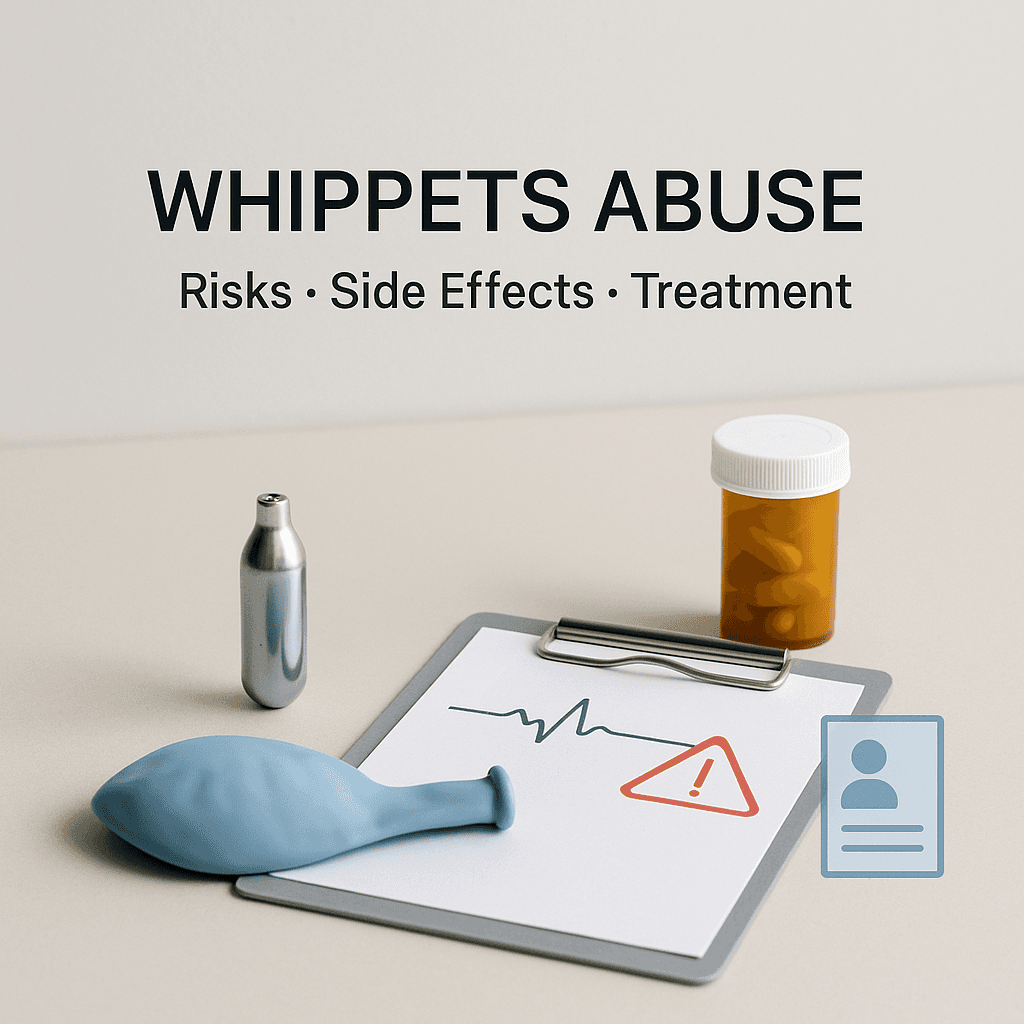
 Whippets might look harmless on the surface. They’re small, cheap, and easy to find. A lot of people don’t even think of them as “drugs” because they’re often sold as whipped cream chargers or used for kitchen purposes.
But when someone inhales the gas inside those canisters to get high, it can turn dangerous fast.
Whippets usually contain nitrous oxide (sometimes called “laughing gas”). In medical settings, nitrous oxide can be used safely with oxygen, proper dosing, and monitoring. Recreational use is different. It’s typically done without oxygen support, without supervision, and often in repeated hits that push the body past what it can safely handle.
What are whippets (and why do people use them)?
“Whippets” is a slang term for inhaling nitrous oxide from:
- Whipped cream chargers (“whippits”)
- Tanks used in some food or automotive contexts
- Balloons filled with nitrous oxide (a common method because it feels less harsh than inhaling directly)
People use whippets because the effects can feel immediate and intense, including:
- A quick rush of euphoria
- Giggles or a floating sensation
- Feeling detached or numb
- Altered sounds and perception
The high is usually short, which is part of what makes it risky. Some people keep going hit after hit trying to “hold onto” the feeling, and that’s where harm stacks up.
Why whippets are riskier than many people realize
A big part of the danger is simple: nitrous oxide displaces oxygen. When you inhale it, you’re not inhaling air. If someone is doing repeated inhales, holding their breath, or using it in a poorly ventilated space, the brain and body can be starved of oxygen.
That oxygen drop can lead to:
- Passing out
- Falls and head injuries
- Dangerous accidents (especially if driving, biking, or standing)
- In worst cases, coma or death from asphyxiation
And that’s just the immediate oxygen side of it. With repeated use, nitrous oxide can also interfere with vitamin B12, which your nervous system depends on. That’s where the longer-term neurological damage can come in, sometimes sooner than people expect.
Common signs and symptoms of whippets abuse
Whippets abuse can look different from person to person, but there are some patterns that show up a lot.
Behavioral signs
- Empty chargers, small canisters, or boxes piling up
- Balloons in the car, bedroom, backpack, or trash
- Using in short bursts, then repeating frequently
- Secrecy, isolation, or locking doors
- Neglecting responsibilities, school, or work
- Risk-taking behavior, especially late at night or while partying
Physical and mental signs
- Dizziness, headaches, nausea
- Confusion or “spacing out”
- Slurred speech or clumsiness
- Tingling or numbness in hands and feet
- Difficulty walking or poor coordination
- Anxiety, irritability, depression
- Memory problems or brain fog
If you’re seeing numbness, weakness, or trouble walking, that’s a big red flag. That can be a sign of nerve injury that needs medical attention.
Short-term risks and side effects (what can happen in the moment)
Even one session can go sideways. The most common short-term risks include:
Oxygen deprivation (hypoxia)
This is one of the biggest dangers. Hypoxia can cause:
- Fainting
- Seizure-like activity
- Confusion and panic
- Heart rhythm issues in vulnerable individuals
If someone passes out due to cerebral hypoxia, they can choke, fall, or stop breathing.
Accidents and injuries
Because whippets can cause dizziness, dissociation, and poor coordination, people may:
- Fall and hit their head
- Wander into unsafe spaces
- Get burned or injured if using around stoves, cigarettes, or fire
These hidden dangers of inhalant abuse underscore the severity of the situation. It’s crucial to understand that these substances are not just harmless fun; they carry serious risks. If you’re noticing these signs in yourself or someone else, it’s important to seek professional help immediately.
Additionally, if there’s a history of substance abuse involving opioids like methadone alongside whippet use, it could complicate the withdrawal process significantly. For instance, methadone abuse can lead to severe dependency issues while Xanax withdrawal poses its own set of challenges.
Frostbite and lung irritation
Nitrous oxide is stored under pressure. When released quickly, it becomes extremely cold. Inhaling directly from a canister can cause:
- Frostbite of the lips, mouth, throat, or vocal cords
- Coughing fits, throat pain, or difficulty swallowing
Dangerous mixing with other substances
Combining whippets with alcohol, opioids, benzodiazepines, or other depressants increases the risk of:
- Blackouts
- Vomiting and aspiration
- Respiratory depression
- Severe impairment and injury
Long-term risks (the part that doesn’t always heal quickly)
This is where people often get blindsided. Someone might think, “It’s just nitrous,” but repeated use can seriously impact the nervous system.
Nerve damage and neurological symptoms
Heavy or chronic use can lead to nerve injury and spinal cord problems linked to B12 disruption. Symptoms may include:
- Persistent numbness or tingling
- Burning sensations or nerve pain
- Weakness in legs or arms
- Trouble balancing or walking
- Loss of sensation in hands/feet
- Difficulty with fine motor skills (buttoning clothes, writing)
Some people recover with treatment at an addiction treatment center such as those in San Diego, Riverside, Ontario, or Oceanside, but others can have lasting effects, especially if use continues after symptoms start.
Vitamin B12 deficiency complications
Nitrous oxide can inactivate vitamin B12 in the body. Low B12 can contribute to:
- Fatigue and weakness
- Mood changes (depression, irritability)
- Cognitive issues
- Neuropathy and coordination problems
Mental health effects
While the high is short, the emotional fallout can linger, especially when use becomes frequent:
- Increased anxiety or panic
- Depressive crashes
- Sleep disruption
- Loss of motivation and emotional numbness
In such cases, incorporating practices like mindfulness meditation during recovery could be beneficial.
Escalation and compulsive use
Because the high fades quickly, people may take more and more hits. That pattern can become compulsive, even if the person doesn’t “want” to be doing it anymore. This is one of those situations where shame can keep someone stuck. They might feel ridiculous needing help for something sold in kitchen supply aisles, so they hide it and keep going.
Overdose and medical emergencies: what to watch for
There isn’t a classic “overdose” the way we think of opioids, but whippets can still cause life-threatening emergencies.
Call 911 or seek emergency care if someone has:
- Trouble breathing or slow breathing
- Blue or gray lips/skin
- Unconsciousness or inability to wake up
- Seizure
- Chest pain, severe confusion, or severe agitation
- Signs of serious injury (head trauma, heavy bleeding)
If someone is passed out, place them on their side (recovery position) to reduce choking risk and stay with them until help arrives.
Why quitting can be harder than people expect
Some people stop after trying it once or twice. Others get pulled into a cycle that’s less about “partying” and more about escaping discomfort.
A few reasons whippets can become a pattern:
- Quick relief: The high is immediate and can temporarily numb anxiety, sadness, or stress.
- Short duration: The effects fade fast, which can lead to repeating it again and again.
- Availability: Chargers can be easy to buy, and the “it’s not a real drug” mindset lowers caution.
- Shame: People often hide it, and isolation makes it easier for use to grow.
If someone has tried to stop and keeps going back to it, that’s not a character flaw. That’s a sign they need real support and a better plan than willpower alone. Seeking professional help such as opioid detox treatment could be an essential step towards recovery.
Treatment options for whippets abuse
Treatment depends on the frequency of use, any medical complications, and underlying issues that may be contributing to the abuse.
1) Medical evaluation (especially for neurological symptoms)
If there are symptoms like numbness, tingling, weakness, trouble walking, confusion, or memory issues, a medical evaluation is crucial.
A clinician may assess:
- Neurological function (balance, reflexes, sensation)
- Vitamin levels (especially B12)
- Overall health markers that could be impacted by chronic use
If B12 deficiency or nerve involvement is suspected, treatment may include B12 supplementation and follow-up care. The earlier this is addressed, the better the chances of recovery.
2) Detox and stabilization (when needed)
Not everyone needs medical detox for nitrous oxide alone, but detox can still be important when:
- Whippets are being used heavily and compulsively
- There are safety concerns at home
- Whippets are being combined with alcohol, opioids, benzos, stimulants, or other drugs
- The person is emotionally unstable, severely anxious, depressed, or not sleeping
- There’s a history of relapse and repeated failed attempts to stop
In such scenarios where heavy usage leads to Klonopin withdrawal symptoms, a structured detox setting can help stabilize the body, support sleep, manage anxiety, and address any co-occurring substance use that may require medical monitoring.
3) Residential treatment (when life has started to revolve around using)
Residential treatment can be a good fit when:
- Use has become daily or binge-based
- There are consequences at work, school, relationships, or finances
- The person feels unable to stop on their own
- Mental health symptoms are intense or worsening
- The home environment makes sobriety hard (easy access, enabling, conflict, isolation)
In residential care, the goal isn’t just “stop using.” It’s about building a life that makes using feel less necessary. This approach is particularly useful in cases where there is a need for methadone for addiction treatment or when implementing specific addiction recovery tips to aid in recovery.
4) Therapy that actually gets to the root of it
Whippets use is often a coping tool. Therapy helps someone build healthier ways to handle what the whippets were temporarily “fixing.”
Approaches that can help include:
- CBT (Cognitive Behavioral Therapy): Identify triggers, shift thought patterns, build practical coping skills.
- DBT (Dialectical Behavior Therapy): Especially helpful for emotional regulation, distress tolerance, and impulsivity.
- Trauma-informed therapy: Many people are using to escape old pain, not chase a party.
- Motivational interviewing: Helps resolve ambivalence and strengthens internal motivation to change.
5) Dual diagnosis support (substance use plus mental health)
It’s very common for whippets abuse to overlap with:
- Anxiety disorders
- Depression
- PTSD or unresolved trauma
- Bipolar disorder
- ADHD
- Social anxiety and isolation
When mental health isn’t treated, relapse risk goes way up. Integrated care gives someone a real shot at stability.
6) Group support and peer connection
Shame thrives in silence. Safe community support helps people realize they’re not alone, and they’re not beyond help.
Group support can offer:
- Accountability without judgment
- Real-life tools that worked for others
- A place to talk honestly about cravings and setbacks
7) Relapse prevention (because “just stop” isn’t a plan)
A solid relapse prevention plan usually includes:
- Identifying triggers (stress, certain friends, certain places, loneliness, boredom)
- Creating a “delay and disrupt” strategy for cravings (leave the environment, call someone, change location fast)
- Removing access when possible (online ordering, stores, paraphernalia)
- Building structure: sleep, meals, movement, daily schedule
- Ongoing therapy and aftercare support
Harm reduction (if someone isn’t ready to quit yet)
If you or someone you love isn’t ready to stop today, you still deserve safer options while you figure things out. Harm reduction is not approval. It’s about keeping someone alive and reducing the chance of permanent damage.
Safer steps include:
- Don’t use alone.
- Don’t mix with alcohol, opioids, or benzos.
- Sit down to reduce fall risk.
- Avoid inhaling directly from a canister (risk of frostbite).
- Take breaks and get real air. Repeated hits back-to-back raise hypoxia risk.
- If numbness, tingling, weakness, or walking changes show up, treat it seriously and seek medical care.
And if you’re reading this thinking, “This already sounds like me,” it might be time to get support sooner rather than later. You don’t have to wait for a scary moment.
When it’s time to get help
It may be time to reach out for treatment if any of these are true:
- Use is increasing or becoming frequent
- They can’t stop even after consequences
- They’re hiding it or using alone
- There are neurological symptoms (numbness, tingling, weakness, balance issues)
- Their mood, sleep, or motivation has changed noticeably
- They’re mixing whippets with other substances
- You’re worried about their immediate safety
If you recognize these signs in yourself or a loved one, it’s crucial to seek professional help. At SoCal Detox in Laguna Beach, we offer a range of holistic detox and residential treatment options with individualized care that meets you where you are, without judgment.
Choosing the right treatment program can be overwhelming. We provide guidance on how to select the best treatment program for addiction, ensuring that the chosen path aligns with the individual’s unique needs.
Our team understands that each person’s journey is different, which is why we offer various types of treatment for addiction, including medical detox. It’s important to note that medical detox may be necessary before treatment, especially in cases of severe addiction.
If you or someone you know is struggling with opioid addiction, we also specialize in methadone treatment, which has proven to be an effective option for many.
If you’re ready to talk and figure out the next right step together, don’t hesitate to call us today.
FAQs (Frequently Asked Questions)
What are whippets and why do people use them?
Whippets refer to the recreational inhalation of nitrous oxide gas from sources like whipped cream chargers, tanks, or balloons. People use whippets to experience immediate and intense effects such as euphoria, giggles, a floating sensation, numbness, and altered perception. The high is short-lived, which often leads users to take repeated hits.
Why are whippets riskier than many people realize?
Whippets are risky because nitrous oxide displaces oxygen when inhaled, leading to oxygen deprivation (hypoxia). Repeated use or using in poorly ventilated spaces can cause serious issues like passing out, falls, accidents, coma, or even death from asphyxiation. Long-term use can also interfere with vitamin B12 absorption, causing neurological damage.
What are common signs and symptoms of whippet abuse?
Signs of whippet abuse include behavioral indicators such as empty chargers or balloons lying around, secrecy, isolation, neglecting responsibilities, and risk-taking behaviors. Physical and mental symptoms include dizziness, headaches, nausea, confusion, slurred speech, numbness in extremities, poor coordination, anxiety, irritability, depression, memory problems, and brain fog.
What are the short-term risks and side effects of using whippets?
Short-term risks include oxygen deprivation causing fainting, seizures, confusion, heart rhythm issues; accidents due to dizziness and poor coordination leading to falls or injuries; frostbite from inhaling cold gas directly; lung irritation; and dangerous interactions when combined with alcohol or other depressants that increase risks of blackouts and respiratory depression.
How can mixing whippets with other substances increase health risks?
Combining whippets with substances like alcohol, opioids (including methadone), benzodiazepines (like Xanax), or other depressants can significantly increase risks such as blackouts, vomiting with aspiration danger, respiratory depression, severe impairment, injury complications during withdrawal processes.
When should someone seek medical help for whippet-related issues?
Medical attention is crucial if someone shows signs of oxygen deprivation (passing out), nerve injury symptoms like numbness or difficulty walking, severe confusion or panic attacks after use. Early treatment can reverse some effects of nitrous oxide exposure. Also seek help if there’s a history of substance abuse complicating withdrawal or if dangerous behaviors are observed.