
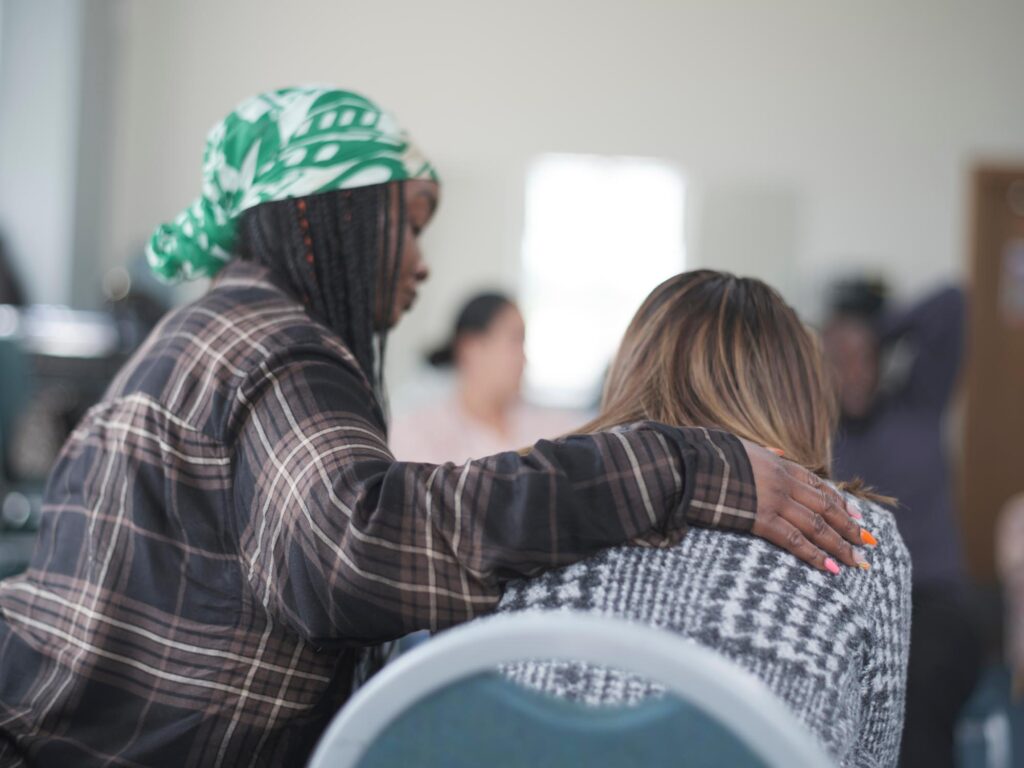

Al‑Anon and Alateen: what they are
Al‑Anon is a peer-led support program for people who are affected by someone else’s drinking. That might be a spouse or partner, a parent, an adult child, a sibling, a close friend, or anyone who feels the ripple effects of alcohol use in their life.
Alateen is the teen-focused part of Al‑Anon. It’s designed for adolescents who are impacted by a parent, caregiver, or loved one’s drinking, along with all the instability that can come with it.
Here’s what most people can expect when they walk into an Al‑Anon or Alateen meeting:
- Meetings are centered on sharing and listening. People talk about what they’re going through, what they’re learning, and what helps them cope.
- You don’t have to speak. It’s completely normal to just sit and listen, especially at first.
- Anonymity is a big deal. These spaces are built so people can be honest without worrying their story will travel.
- There’s no pressure to agree with everything. A common mindset is “take what you like and leave the rest.” If something doesn’t fit for you, you can let it go.
A few helpful boundaries around common misconceptions:
- This isn’t therapy and it’s not professional counseling.
- It’s not a place to “fix” the person who’s drinking. The focus is you, your choices, and your well-being.
- It’s not a substitute for emergency help. If there’s immediate danger, you don’t wait for a meeting.
Accessibility-wise, many areas offer local in-person meetings and online meetings. You’ll also hear terms like open and closed meetings. High level: open meetings may allow observers/guests in some situations, while closed meetings are typically for people who identify as being affected by someone else’s drinking. When in doubt, check the meeting description and choose what feels comfortable.
In addition to traditional support methods, digital platforms are also making strides in providing necessary assistance. For instance, St Bonaventure University has embraced digital peer support to help their students navigate through challenges such as those posed by substance abuse in their families or social circles.
Why family support matters when alcohol use is in the home
Alcohol misuse rarely stays contained to one person. It tends to reshape the whole household system, sometimes slowly, sometimes all at once.
Families often deal with:
- Chronic stress and unpredictability (never knowing which version of the day you’re walking into)
- Conflict cycles (arguments, apologies, promises, repeat)
- Financial strain (missed work, legal costs, impulsive spending, instability)
- Parenting disruption (kids adapting to chaos, inconsistent routines, role reversals)
- Loss of emotional safety (walking on eggshells, bracing for the next blow-up)
And emotionally, it’s common for family members to carry a messy mix of:
- hypervigilance (“I have to stay alert or something will go wrong”)
- guilt (“Maybe it’s my fault”)
- resentment (“Why am I the only one holding this together?”)
- shame (“No one can know what’s happening”)
- loneliness (“Nobody gets it”)
- grief (mourning the relationship you wish you had)
- fear (about relapse, escalation, or what comes next)
Over time, families can fall into survival roles that keep the machine running, even when it’s hurting everyone. You might recognize patterns like:
- The caretaker who smooths everything over and handles consequences
- The hero who tries to be perfect and make the family look “fine”
- The scapegoat who acts out and draws attention away from the real problem
- The lost child who disappears emotionally to avoid the stress
None of these roles mean you did anything wrong. They’re often what people do when they’re trying to survive something that feels unsolvable.
Support like Al‑Anon helps reframe “help” into something more sustainable. Instead of living in constant crisis management, families start practicing steadier coping, clearer boundaries, and healthier choices that don’t depend on the person drinking being ready to change.
One quick, practical safety note: if there’s violence, threats, unsafe driving, medical emergencies, or suicidal thoughts, treat that as urgent. Call 911 for immediate danger/medical emergencies, and call or text 988 for mental health crisis support in the U.S., or go to the nearest ER.
In such challenging circumstances, it’s crucial to seek professional help. Therapeutic interventions can play a significant role in addressing these issues effectively.
Al‑Anon vs AA: key differences
AA (Alcoholics Anonymous) is for the person who has a drinking problem and wants help stopping.
Al‑Anon is for the people impacted by that drinking.
The goals are different, too:
- AA focuses on sobriety and personal recovery from alcohol use.
- Al‑Anon focuses on family member recovery, including boundaries, emotional stability, and a concept many people find life-changing: detachment with love (caring about someone without being consumed by their choices).
They can run in parallel in a really healthy way. One person might attend AA while their spouse, parent, or adult child attends Al‑Anon. Each person owns their own recovery path, and nobody has to wait for someone else to “do it right” before getting support.
It’s also important to know this: mutual-support programs can be powerful, but they’re not a replacement for treatment. They often work best alongside clinical care, especially during detox, residential treatment, outpatient programs, and aftercare.
And one more point that clears up a lot of confusion: you can attend Al‑Anon even if your loved one isn’t in AA and even if they haven’t stopped drinking. You don’t need their permission or participation to get support for yourself.
How Alateen supports teens living with a loved one’s drinking
Alateen is for teens who are dealing with a parent, guardian, sibling, or close person’s alcohol use. Sometimes the drinking is obvious. Sometimes it’s hidden but the chaos shows up anyway. Either way, teens often end up carrying way more than they should.
Many teens in this situation wrestle with:
- secrecy and “don’t tell anyone” rules
- divided loyalty (love them, hate what alcohol does to them)
- embarrassment and isolation
- anger, anxiety, or numbness
- perfectionism (“If I’m good enough, maybe things won’t explode”)
- feeling responsible for keeping the peace
Alateen gives teens a place to be honest with people who actually get it, and a place to practice real-life skills like:
- noticing and naming emotions (instead of stuffing them down)
- calming their nervous system when things feel out of control
- asking for help without shame
- setting boundaries (even small ones)
- identifying trusted adults and safe places
If you’re a parent or caregiver trying to introduce Alateen, the tone matters. A few gentle guidelines usually help:
- Offer it as support, not a consequence. “This might help you feel less alone,” lands better than “You need this.”
- Respect privacy. Teens are more likely to engage if they don’t feel monitored.
- Don’t use it to manage behavior. Alateen isn’t a tool to “fix” a teen any more than Al‑Anon is a tool to fix the person drinking.
Safety note: if there’s abuse, neglect, or immediate danger in the home, prioritize professional and legal supports first. Alateen can be supportive, but safety comes first.
Codependency and enabling: patterns Al‑Anon helps families change
When alcohol is part of the family system, a lot of people start doing things that look like love, but feel like losing yourself.
Codependency, in this context, often means over-functioning, people-pleasing, and tying your self-worth to managing someone else’s mood, behavior, or drinking. It can show up as constant monitoring, fixing, smoothing, rescuing, and doing emotional gymnastics to prevent the next blow-up.
Enabling is different from support, even though it often comes from good intentions. Enabling behaviors can unintentionally reduce the consequences of drinking, which can keep the cycle going. Examples include:
- covering up or lying to others
- rescuing them from preventable consequences
- making excuses (to work, family, friends)
- giving money for “needs” that end up funding alcohol
- calling in sick for them or handling responsibilities they repeatedly drop
Al‑Anon principles help families shift the focus back to what we can control. Not the drinking. Not the promises. Not the excuses. But our own choices, boundaries, and well-being.
What healthier support can look like in real life:
- refusing to lie or cover for someone
- not riding in a car with someone who has been drinking
- protecting children’s routines and emotional safety, even if the household is chaotic
- setting clear boundaries with clear consequences, and following through
- stepping out of arguments that are going nowhere
If this feels hard, that’s because it is. Most people don’t flip a switch and suddenly stop rescuing. These patterns often formed over years. Progress is usually gradual, and self-compassion matters. You’re learning a new way to love, and that takes time.
Coping with a loved one’s drinking: practical tools families can start using now
If you’re living with unpredictability, broken promises, and emotional whiplash, coping tools aren’t “nice to have.” They’re how you keep your footing, even if your loved one isn’t ready to change yet.
Boundary basics that actually work
The simplest way to think about boundaries is this: they’re not about controlling someone else. They’re about clarifying what you will do to protect your values and safety. Helpful boundaries tend to be:
- Specific (not vague like “be better”)
- Measurable (you can tell if it happened or not)
- Connected to your values (safety, stability, respect, health)
- Followed by a realistic action you can take
Example: instead of “Stop drinking,” a boundary might sound like, “If you’ve been drinking, I won’t argue with you. I’m going to take the kids to my sister’s for the night.”
That’s not punishment. That’s protection. For more on how to effectively establish these boundaries, consider exploring this resource.
Protecting kids and teens without oversharing
Kids usually know more than adults think. What they often don’t have is a safe explanation that helps them make sense of it without blaming themselves.
A few supportive basics:
- use age-appropriate honesty (“Alcohol is making it hard for Dad to make safe choices right now”)
- keep consistent caregiving routines as much as possible (meals, school, bedtime)
- remind them often: it’s not your fault
- identify safe adults they can talk to (family member, school counselor, coach, therapist)
Self-care that isn’t fluff
When people hear “self-care,” they sometimes picture bubble baths. That’s not what we mean.
Real self-care in this situation often looks like:
- keeping up with medical checkups (stress takes a physical toll)
- therapy, especially if you’re carrying trauma or anxiety
- movement (walks, strength training, yoga, anything that helps discharge stress)
- journaling to get out of looping thoughts
- attending meetings consistently, even when things calm down
When to consider professional help for the family
It may be time to bring in professional support if you notice:
- trauma symptoms (nightmares, flashbacks, panic, emotional numbness)
- anxiety or depression that’s sticking around
- escalating domestic conflict
- caregiver burnout (irritability, exhaustion, hopelessness, health decline)
Support groups can be a lifeline, and sometimes they work best alongside therapy, family counseling, or other clinical support.
What to expect at an Al‑Anon or Alateen meeting
Walking into the first meeting can feel intimidating, especially if you’re used to keeping everything private. Most people show up with some mix of hope, skepticism, and exhaustion.
A typical first meeting experience is simple:
- You show up (in person or online).
- You listen.
- Sharing is usually optional, especially for newcomers.
- Nobody is supposed to pressure you to tell your story.
Many meetings include some combination of short readings, a topic, and personal sharing from members about their own experiences. People often connect afterward too, like exchanging numbers or chatting briefly, but you can participate at your own pace.
One thing that surprises people: different groups have different vibes. If the first meeting doesn’t feel like a fit, that doesn’t mean Al‑Anon or Alateen isn’t for you. It can be completely normal to try a few meetings before you find one where you can breathe.
For online meetings, a few basics make it easier:
- join a few minutes early so you’re not rushing
- keep yourself muted unless you’re speaking
- choose a private space (or use headphones) if you can
- turn your camera on or off based on what feels safe and allowed for that meeting
A simple first goal that’s enough for day one: “I’m here to feel less alone and learn one helpful idea.”
Trusting SoCal: how we support the whole family while your loved one gets help
If your loved one is entering detox or treatment, family members often feel a confusing wave of emotions. Relief, fear, anger, exhaustion, hope, and distrust can all show up at the same time. That’s normal. It also matters, because family support is often part of what makes recovery sustainable.
At SoCal Detox, we provide personalized, compassionate detox and residential treatment in Laguna Beach, Orange County, with a community-focused and holistic lens. And we don’t just think about the individual in a vacuum. We think about the system they’re going back to, including the people who love them.
This is where Al‑Anon and Alateen can fit in beautifully. Mutual-support can complement clinical care during detox and residential treatment, and it can strengthen aftercare planning by helping families:
- stop living in constant crisis response
- build healthier boundaries and communication patterns
- create a support plan that doesn’t depend on monitoring the patient’s every move
- stay steady through the ups and downs that can come with early recovery
Recovery is a process, not a switch that flips. Families deserve their own support plan too.
If you’re not sure what the next step should be, reach out to us. Call SoCal Detox or contact us through our website to talk about admissions, timing, and family support options. We’ll walk you through it with care, clarity, and zero judgment.
FAQ
Is Al‑Anon only for spouses?
No. Al‑Anon is for anyone affected by someone else’s drinking, including parents, adult children, siblings, friends, and partners.
Does my loved one have to stop drinking for me to go to Al‑Anon?
No. You can go whether they’re still drinking, in denial, or not seeking help yet.
Is Al‑Anon the same as therapy?
Not exactly. Al‑Anon is peer support, not professional counseling. Many people use it alongside therapy, and that combination can be really helpful.
What’s the difference between Al‑Anon and AA?
AA is for the person who wants to stop drinking. Al‑Anon is for people impacted by someone else’s drinking and focuses on boundaries, coping, and personal recovery.
What ages is Alateen for?
Alateen is designed for adolescents. Specific age ranges can vary by area, so it’s best to check your local listings.
What if there’s abuse or I don’t feel safe at home?
If there’s immediate danger, call 911. For suicidal thoughts or a mental health crisis, call or text 988 in the U.S. If there’s ongoing abuse or neglect, prioritize professional and legal support first.
Can I try a meeting without talking?
Yes. You can simply listen. Many people do that for their first few meetings.
Are there online meetings if I can’t attend in person?
Yes. Many Al‑Anon and Alateen meetings are available online, which can be a great option if you need privacy, flexibility, or quick access.
How can SoCal Detox help our family while our loved one gets treatment?
We support the recovery process with personalized detox and residential care, and we can help you think through next steps, aftercare, and family support options so you’re not carrying this alone. Call us or reach out through our website to talk through what’s happening and what help could look like.
FAQs (Frequently Asked Questions)
What are Al-Anon and Alateen, and who are they designed to support?
Al-Anon is a peer-led support program for people affected by someone else’s drinking, including spouses, partners, parents, adult children, and friends. Alateen is the teen-focused part of Al-Anon specifically designed for adolescents dealing with a parent, caregiver, or loved one’s alcohol use.
How does Al-Anon differ from Alcoholics Anonymous (AA)?
AA is a program for individuals who have a drinking problem focusing on sobriety and personal recovery. In contrast, Al-Anon supports family members and friends impacted by someone’s drinking, emphasizing detachment with love, setting boundaries, and family member recovery. Both programs can complement each other but serve different participants and goals.
What types of support and activities can I expect at an Al-Anon or Alateen meeting?
Meetings typically involve sharing experiences, listening to others in a safe and anonymous environment, and adopting a ‘take what you like and leave the rest’ approach. They are peer-led support groups focused on wellbeing rather than professional counseling or therapy.
Why is family support important when living with someone who misuses alcohol?
Alcohol misuse affects the entire family system causing chronic stress, conflict cycles, financial strain, parenting disruption, and emotional safety concerns. Family members often experience guilt, resentment, loneliness, grief, and fear about relapse or escalation. Support helps establish healthier boundaries and coping strategies to promote wellbeing.
What is codependency and enabling in families affected by alcoholism, and how does Al-Anon help?
Codependency involves over-functioning behaviors like people-pleasing and tying self-worth to managing someone else’s behavior. Enabling includes actions that unintentionally reduce the consequences of drinking such as covering up or making excuses. Al-Anon teaches detachment with love by focusing on what we can control and building healthier relationship dynamics through clear boundaries.
What practical tools can families use to cope with a loved one’s drinking?
Families can set specific boundaries aligned with their values; use ‘I’ statements in communication; avoid arguing during intoxication; establish routines to reduce chaos; protect children with age-appropriate honesty; build small support networks; and prioritize self-care that addresses medical and emotional needs to manage caregiver burnout effectively.