


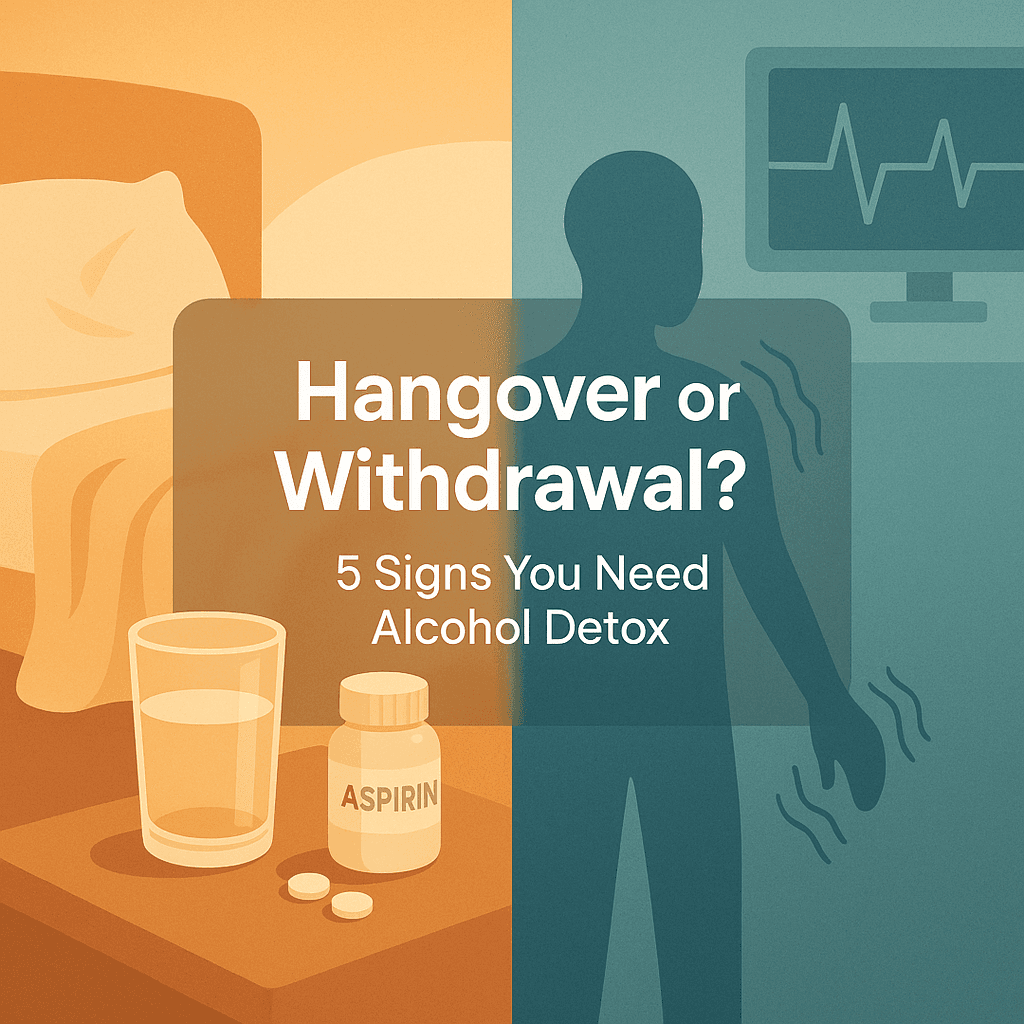
 If you’ve ever woken up after drinking and thought, Okay… this feels worse than usual, you’re not alone. A hangover can be miserable. But sometimes what you’re feeling isn’t a hangover at all. It’s alcohol withdrawal, and it’s your body waving a pretty serious flag that it needs help.
Here’s the tricky part: hangovers and withdrawal can look similar at first. Both can come with nausea, anxiety, sweating, and shaking. The difference is what’s causing it, how long it lasts, and how risky it can get.
A hangover is your body recovering from alcohol’s effects after a heavy night. Withdrawal happens when your body has adapted to regular alcohol use and then suddenly doesn’t get it. That “missing alcohol” creates a rebound effect in your nervous system, and symptoms can escalate fast. For more insights on managing alcohol withdrawal symptoms, refer to this resource.
If you’re wondering which one you’re dealing with, these five signs can help you spot when it’s time to take alcohol detox seriously. These signs are crucial in understanding when medically supervised detox could be the safest next step.
Quick gut-check: hangover vs. withdrawal
Before we get into the signs, here’s a simple way to think about it:
- Hangover usually peaks in the morning and improves steadily over the day with rest, hydration, and time.
- Withdrawal often starts several hours after your last drink, can intensify, and may come with symptoms that feel more “medical” than “ugh.” The duration of alcohol withdrawal symptoms can vary significantly from person to person.
Also, withdrawal tends to show up when drinking has become frequent enough that your body expects alcohol to function normally. That can happen faster than people realize, especially if alcohol has become a daily coping tool.
Now let’s talk about the five signs that what you’re experiencing may be withdrawal and that medications used in alcohol detox might be necessary for recovery.
1) Your symptoms get worse instead of better as the day goes on
Most hangovers slowly fade. Withdrawal can do the opposite.
If you notice that the longer you go without alcohol, the more uncomfortable you feel, that’s a big clue. People often describe it like their body is “revving” or their nerves are “on fire.” Instead of settling down, symptoms may ramp up through the afternoon or evening.
What this can look like:
- Shakiness that gets more noticeable with time
- Increasing sweating or chills
- Rising anxiety, agitation, or irritability
- Feeling like you can’t get comfortable in your own skin
A common pattern we hear: someone feels awful, decides to “push through,” and then hours later feels even worse. That worsening curve leans away from hangover and toward withdrawal. If you’re not sure, trust the direction your body is moving. Hangovers generally trend better. Withdrawal can trend dangerous.
For many, these signs might indicate a deeper issue, such as alcoholism. If you’re experiencing these symptoms frequently, it may be time to seek professional help.
2) You get relief when you drink again (the “hair of the dog” isn’t working like a hangover fix)
This one can be uncomfortable to admit, so I’ll say it plainly and without judgment: if a drink doesn’t just “take the edge off,” but makes you feel noticeably normal again, that’s often a withdrawal sign.
With a hangover, drinking again might numb the misery for a bit, but it usually doesn’t truly reset you. With withdrawal, alcohol can temporarily quiet the symptoms because your body is essentially getting what it’s been demanding.
Signs this might be happening:
- Your hands stop shaking shortly after a drink
- Your heart stops racing after a drink
- Your anxiety drops quickly after a drink
- You can finally eat or sleep after a drink
This can quietly turn into a cycle: you feel awful, you drink to steady yourself, you feel better briefly, and then withdrawal returns when it wears off. That loop is one of the reasons detox support matters. It’s not just about “stopping.” It’s about stopping safely and breaking the pattern in a way your nervous system can handle.
If you’re worried about how to manage detox without jeopardizing your job or personal life, consider exploring options for detoxing without losing your job.
3) You have withdrawal-specific symptoms that aren’t typical hangover stuff
Hangovers can bring headaches, nausea, fatigue, and sensitivity to light. Withdrawal can bring symptoms that feel more intense, more neurological, and more urgent.
Here are withdrawal symptoms that should get your attention:
Shaking or tremors
A little shakiness from dehydration is one thing. Persistent hand tremors that make it hard to hold a cup, text, or steady your fingers can be withdrawal.
Rapid heartbeat or high blood pressure feelings
People often describe it as:
- “My heart is pounding.”
- “I feel like I’m buzzing.”
- “I can’t calm down.”
This rapid heartbeat is a common symptom during withdrawal as alcohol affects the nervous system, and the body can swing into overdrive.
Sweating, chills, and temperature swings
Waking up drenched, then freezing, then drenched again is a common withdrawal experience.
Intense anxiety, panic, or agitation
Not just “hangxiety.” More like:
- racing thoughts
- dread that won’t lift
- feeling on edge for no clear reason
- restlessness that makes it hard to sit still
Confusion, hallucinations, or feeling detached from reality
If you’re seeing or hearing things that aren’t there, feeling disoriented, or struggling to track what’s real, that’s an emergency-level warning sign. Severe withdrawal can become life-threatening. Severe alcohol withdrawal can include seizures and delirium tremens (DTs).
To be extra clear: trying to white-knuckle alcohol withdrawal alone can be risky. Understanding these 6 symptoms of detoxing from alcohol could help you identify if you need professional assistance. If you find yourself in such a situation, it’s crucial to seek help for what could be an alcohol use disorder.
Remember that there’s a significant difference between detoxing and rehab; knowing this quick clear difference could also provide clarity during this challenging time.
4) You can’t sleep at all, and it feels like your body forgot how to rest
A hangover might make you tired, but withdrawal often makes sleep feel impossible. You’re exhausted, but your body won’t shut off. You may lie there with a pounding heart, sweating, anxious thoughts, or a jittery feeling that keeps you awake for hours.
Common withdrawal sleep clues:
- Falling asleep briefly, then jolting awake
- Vivid nightmares or unsettling dreams
- Restless legs, twitching, or constant repositioning
- Feeling wired and exhausted at the same time
Sleep problems matter because they can accelerate everything else. When you don’t sleep, anxiety rises, your ability to cope drops, and cravings can get louder. Detox support can help stabilize this period so you’re not trapped in a spiral of insomnia and panic.
5) This isn’t the first time it’s happened (and it’s getting harder each time)
One of the biggest signs you may need detox is history.
If you’ve tried to stop before and noticed that withdrawal symptoms show up faster, feel stronger, or scare you more than they used to, that’s important. Many people don’t realize that alcohol withdrawal can intensify over repeated quit attempts. Even if you were able to “push through” in the past, it doesn’t mean the next time will be the same.
Ask yourself:
- Have I had shaky mornings more than once?
- Have I had to drink to stop feeling sick or anxious?
- Do I plan my mornings around whether I’ll feel okay?
- Have I tried to cut back and found I can’t?
- Do I keep telling myself “I’ll stop after this week” and then it doesn’t happen?
If withdrawal has become part of your routine, detox isn’t a punishment. It’s support. It’s a safe landing. If you’re unsure about whether you need rehab or not, consider asking yourself some questions outlined in this guide. Remember that reaching out to a detox center doesn’t necessarily mean a long-term commitment; it’s often just about getting the help you need when you need it most.
A few high-risk signs that mean “don’t wait this out”
If any of these are happening, please treat it as urgent and get medical help right away:
- Seizure (even a single one)
- Confusion, severe disorientation, or inability to stay awake
- Hallucinations (seeing, hearing, or feeling things that aren’t there)
- Chest pain, fainting, or severe trouble breathing
- Uncontrollable vomiting or signs of dehydration you can’t manage
Alcohol withdrawal can become life-threatening. Getting help is not overreacting. It’s being smart.
“But what if I’m not that bad?” Here’s the truth
Most people don’t wake up and decide, Today I’ll need detox. They arrive at the question quietly, over time.
They notice:
- alcohol is doing more “heavy lifting” emotionally
- mornings are getting rougher
- anxiety is creeping in
- sleep is a mess
- they’re drinking to feel normal, not to have fun
You don’t have to hit some dramatic bottom to deserve help. If you’re asking whether it’s hangover or withdrawal, your body is already giving you data. You’re allowed to take that seriously.
What alcohol detox actually does (and why it can feel like a relief)
Detox is not just “not drinking.” Detox is a supported, structured process where your body can safely adjust to being alcohol-free.
At a quality detox program, the goal is to:
- monitor withdrawal symptoms and medical stability
- reduce risk of complications
- help you rest, hydrate, and eat again
- support the anxiety and insomnia that can feel unbearable early on
- create a plan for what comes next, so you’re not sent back into the same stressors with no support
And emotionally, detox can be a huge exhale. Because for many people, the scariest part isn’t quitting. It’s the fear of what their body will do when they quit.
You don’t have to do that alone. It’s important to approach this journey with the right recovery mindset. Remember, leaving alcohol detox early could lead to serious consequences.
What to expect when you reach out to us
When you reach out to SoCal Detox, we prioritize human connection over clinical detachment. Our conversation will be open and empathetic, allowing you to express your feelings, share your experiences with alcohol, and voice your concerns. If you’re uncertain about the necessity of detox, we’re here to help you navigate that decision.
As a holistic drug and alcohol detox and residential treatment center located in Laguna Beach, Orange County, we offer personalized care rooted in a community-focused approach. We serve individuals throughout Southern California with compassion and understanding. Our aim is not just to alleviate symptoms but to provide comprehensive support tailored specifically for you.
If you’re currently feeling anxious or overwhelmed, unsure if your situation has escalated beyond control, we urge you to take the first step towards recovery. Call SoCal Detox today. Let’s have an honest conversation about your current experiences and discuss what a safe, supportive alcohol detox could look like for you.
During this process, it’s essential to know what to expect. We can guide you through the various stages of alcohol detox, including the medically-assisted detox if necessary. It’s also important to be aware of potential drug and alcohol detox symptoms, which we can help manage effectively.
Our commitment extends beyond just providing a service; we strive to deliver a quality drug and alcohol detox program that truly makes a difference in your life. Remember, you’re not alone in this journey.
FAQs (Frequently Asked Questions)
What is the difference between a hangover and alcohol withdrawal?
A hangover occurs as your body recovers from alcohol’s effects after a heavy night and usually improves steadily throughout the day with rest and hydration. Alcohol withdrawal happens when your body has adapted to regular alcohol use and suddenly doesn’t get it, causing symptoms that can intensify over time and may feel more medical or severe.
What are common symptoms that indicate alcohol withdrawal rather than a hangover?
Symptoms of alcohol withdrawal can include worsening shakiness or tremors, increased sweating or chills, rising anxiety or irritability, feeling uncomfortable in your own skin, and neurological signs such as persistent hand tremors that interfere with daily tasks. These differ from typical hangover symptoms like headache, nausea, and fatigue.
Why does drinking again provide relief during alcohol withdrawal but not during a hangover?
During alcohol withdrawal, drinking again temporarily quiets symptoms because your body is craving alcohol to function normally. This relief can be noticeable and reset symptoms temporarily. In contrast, drinking during a hangover might numb discomfort briefly but doesn’t truly restore normalcy.
How can I tell if my symptoms are getting worse due to withdrawal instead of improving like a hangover?
If your symptoms intensify as the day goes on—such as increasing shakiness, sweating, anxiety, or agitation—instead of gradually improving with rest and hydration, this suggests withdrawal. Hangovers typically trend better over time, while withdrawal symptoms can escalate and become dangerous.
When should someone consider medically supervised detox for alcohol withdrawal?
If you notice signs like worsening symptoms throughout the day, relief only after drinking again, or specific neurological symptoms such as persistent tremors, it’s important to seek professional help. Medically supervised detox ensures safety during withdrawal and helps break the cycle of dependence effectively.
Can frequent use of alcohol as a coping tool lead to faster development of withdrawal symptoms?
Yes. Using alcohol daily or frequently as a coping mechanism can cause your body to adapt quickly to its presence. When alcohol is suddenly stopped or reduced, withdrawal symptoms may appear sooner than expected due to this physical dependence.