


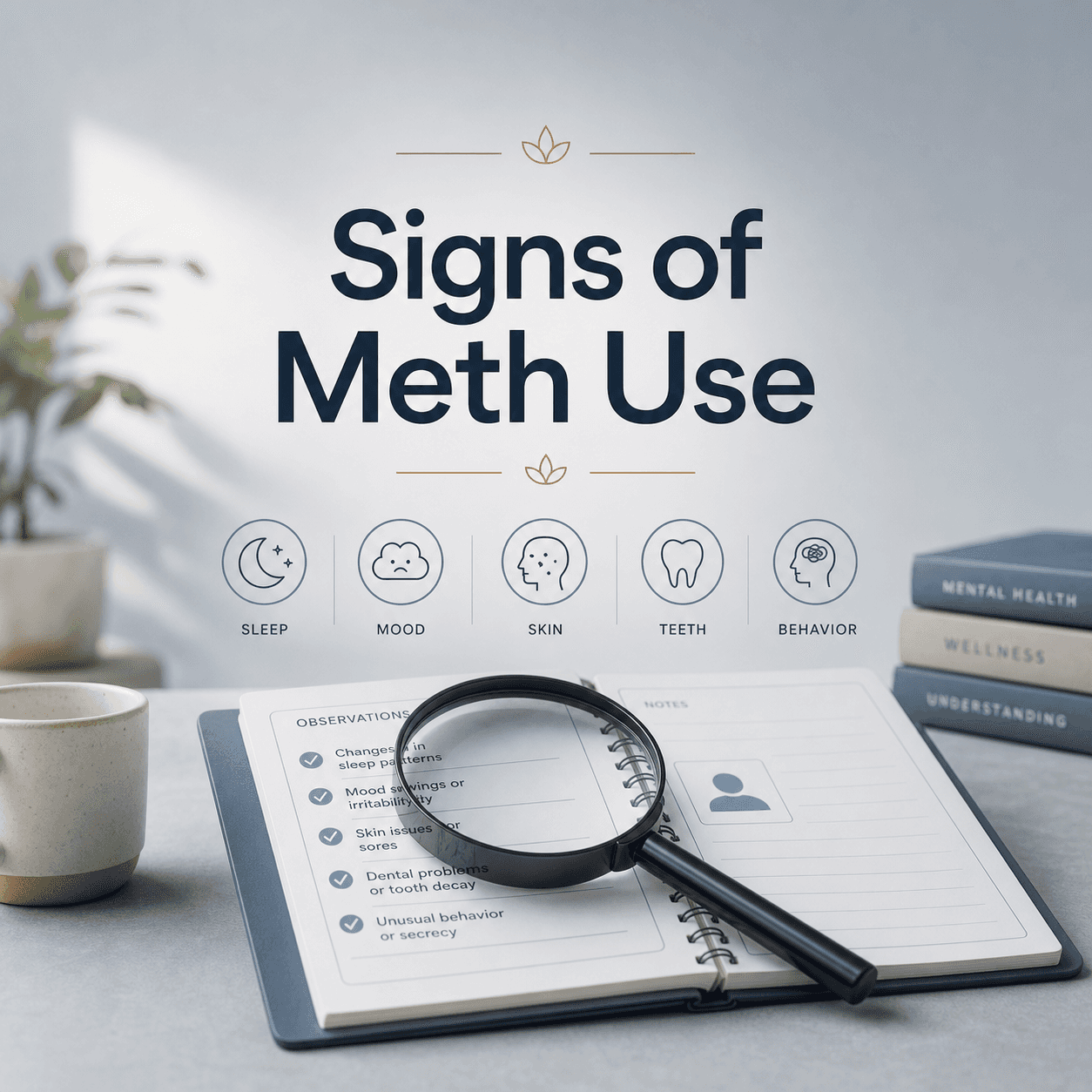
 Crystal meth can change someone fast. Sometimes it’s loud and obvious. Other times it’s quieter, like a slow shift in personality, sleep, and health that loved ones can’t quite put their finger on at first.
If you’re here because you’re worried about someone (or you’re worried about yourself), I want you to know you’re not “overreacting.” Meth is a powerful stimulant, and it can affect the body, brain, mood, and behavior in ways that are genuinely scary. The good news is that noticing the signs early can create a window for real help.
Below are some of the most common signs of crystal meth use, plus a few “easy-to-miss” clues that often show up before things fully unravel.
How crystal meth affects the body and brain (in real life)
Meth floods the brain with dopamine, the chemical tied to motivation, pleasure, reward, and drive. That’s why early use can look like “energy,” “confidence,” or “productivity.” But the brain quickly adapts, and people often need more to feel normal, not even to feel good.
At the same time, meth ramps up the nervous system: heart rate, blood pressure, body temperature, alertness, and agitation. That combination can lead to sleeplessness, paranoia, impulsive decisions, and a body that starts breaking down under stress.
So when we talk about “signs,” we’re usually looking at patterns that reflect those changes.
Physical signs of crystal meth use
Physical signs can show up early, especially when use is frequent or escalating. A single symptom doesn’t automatically mean meth; for instance, the difference between crystal meth and Percocet is significant but can sometimes be confused due to overlapping symptoms. However clusters of changes are worth paying attention to.
Additionally, it’s important to recognize that Xanax addiction can also present similar physical signs. Likewise, certain alcohol rehab warning signs should not be overlooked as they may indicate an underlying issue related to substance abuse.
Moreover, if you notice any Klonopin addiction signs or if someone seems like a high functioning alcoholic, these are serious red flags too.
Changes in appearance and hygiene
- Noticeable weight loss (often quickly), reduced appetite, a “gaunt” look
- Looking run-down: pale skin, dark circles, sunken cheeks
- Neglected grooming: not showering, wearing the same clothes repeatedly, messy hair
- Skin picking or sores: small scabs on face, arms, or legs (sometimes from the sensation of “bugs crawling”)
- Burns or stains on fingers or lips (if smoking), or chemical smells on clothing
“Meth mouth” and dental issues
Dental problems are one of the more well-known long-term signs, but they can start earlier than people think. You might notice:
- Dry mouth and constant thirst
- Bad breath
- Tooth grinding (bruxism) and jaw clenching
- Rapid tooth decay, gum irritation, mouth sores
- Complaints of tooth pain but avoiding the dentist
These issues can come from dry mouth, poor nutrition, teeth grinding, acidic beverages, and neglected hygiene. It’s worth noting that meth use can significantly impact oral health, leading to a range of dental problems plus the overall impact of meth on the body.
Sleep changes (big red flag)
Meth often disrupts sleep in extreme ways:
- Staying up all night, then crashing for long stretches
- Going days with little sleep
- Restless, shallow sleep with frequent waking
- Odd hours: awake at 3 a.m. reorganizing, cleaning, or “working” intensely
A common pattern is a cycle of stimulation followed by exhaustion. Loved ones often describe it as someone looking “wired,” then disappearing into a crash.
Additionally, it’s important to understand that the physical toll of meth use extends beyond just appearance and dental health. It can also lead to severe sleep disturbances which serve as a major red flag for users and their loved ones.
Pupil changes and body cues
During intoxication, people may have:
- Dilated pupils
- Excessive sweating
- Tremors, shaky hands
- Fast talking, rapid movements, pacing
- Increased sexual drive (sometimes risky behavior)
- Nosebleeds or chronic sniffing (if snorting)
- Track marks or bruising (if injecting), often hidden by long sleeves
Also pay attention to frequent headaches, chest pain, shortness of breath, or heart palpitations, which can be dangerous and require medical care.
Behavioral signs of crystal meth use
Behavior changes are often what families notice first, even when physical signs are being hidden.
Sudden shifts in routine and priorities
- Unexplained absences, disappearing for hours or days
- Being “busy” but unable to explain where they’ve been
- Dropping responsibilities: work, school, parenting, bills
- Losing interest in hobbies, relationships, or goals they used to care about
- Secretive behavior: locking doors, hiding phones, new passwords
Money problems that don’t add up
Meth use can get expensive quickly, and it often comes with:
- Borrowing money constantly
- Missing rent or bills despite having income
- Selling personal items (or things going missing)
- New “friends” who seem to appear out of nowhere, especially if they’re around only when money is involved
Paraphernalia or suspicious items
Depending on the method of use, you might find:
- Glass pipes, torches, small baggies, straws, razor blades
- Burnt foil, lighters, cut straws
- Needles, syringes, spoons, cotton, tourniquets
- Small “crystal-like” rocks or shards
- Unusual chemical odors, especially in personal spaces or cars
People may also carry gum, toothpicks, or mints constantly to manage dry mouth or jaw tension.
Agitation, impulsivity, and risk-taking
Meth can crank up intensity and lower judgment:
- Irritability, snapping, anger that feels out of proportion
- Impulsive decisions, reckless driving, risky sexual behavior
- Compulsive cleaning, organizing, or repetitive tasks
- Hyperfocus on one idea, project, or person
- Talking very fast and jumping topics
Sometimes this looks like “motivation,” until it starts spilling into chaos.
Emotional and psychological signs
Meth affects how someone feels, thinks, and perceives reality. These signs can be especially painful for loved ones because it may feel like the person you know is disappearing.
Mood swings and personality changes
Common emotional signs include:
- Sudden confidence that flips into shame or rage
- Emotional “flatness” when not using
- Increased anxiety or panic
- Depression during the crash phase
- Becoming suspicious, defensive, or unusually cold
Paranoia and meth-induced psychosis
With heavy or prolonged use, meth can cause paranoia and even psychosis. This may include:
- Believing people are watching, following, or spying
- Accusing loved ones of betrayal without evidence
- Hearing voices or seeing things that aren’t there
- Talking in a scattered, hard-to-follow way
- Not trusting anyone, including family
This can lead to terrifying experiences such as schizophrenia and nightmares, which can be distressing for everyone involved. If someone is a danger to themselves or others, or they’re severely detached from reality, emergency help may be needed right away.
Social signs that often show up in relationships
Meth use tends to isolate people and strain relationships. Some signs show up in the “vibe” of daily life.
You may notice:
- Pulling away from family, long-time friends, or supportive people
- Only spending time with a new circle that feels secretive or unstable
- Increased conflict, lying, broken promises
- Disappearing during holidays, birthdays, or important events
- Uncharacteristic behavior: aggression, manipulation, or emotional distance
Loved ones often describe feeling like they’re “walking on eggshells,” never sure which version of the person they’ll get.
However, these signs are not exclusive to meth use. They can also manifest in other substance abuse situations such as fentanyl overdose, alcoholism, or even when a partner is struggling with addiction (signs your spouse may have an addiction).
Signs specific to different methods of meth use
People use meth in different ways, and the signs can vary a bit.
Smoking meth
- Burns on lips or fingertips
- Coughing, sore throat, chest irritation
- Glass pipe or torch lighters
Snorting meth
- Frequent runny nose or congestion
- Nosebleeds
- Irritated nostrils, chronic sniffing
Injecting meth
- Track marks, bruises, abscesses
- Wearing long sleeves even in heat
- Increased risk of infections and medical complications
Oral use (swallowing)
This can be harder to spot, but you might still see:
- Severe insomnia
- Appetite suppression
- Mood swings and agitation
- Teeth grinding and jaw clenching
“High” vs. “crash”: what the cycle can look like
One reason meth is so disruptive is the intense up-and-down cycle.
When someone is high (intoxicated)
- Energetic, talkative, restless
- Confident or unusually social
- Not hungry, not tired
- Dilated pupils, sweating, rapid movement
- Irritable, obsessive, or overly focused
When someone is crashing
- Sleeping for long periods
- Depressed mood, crying spells, hopelessness
- Intense hunger
- Anxiety, shame, agitation
- Physical exhaustion and body aches
During the crash, some people are at higher risk for self-harm or dangerous decisions, especially if they feel trapped, guilty, or desperate.
Signs of meth addiction (not just use)
It’s possible for someone to use and not meet criteria for addiction, but meth can pull people into dependence quickly. Signs that it’s moved into addiction often include:
- Needing meth to feel normal or get through the day
- Using more than intended, or failing to cut down
- Spending significant time getting, using, or recovering
- Continuing use despite losing relationships, jobs, housing, or health
- Strong cravings and obsessive thinking about meth
- Dangerous behavior while using
- Withdrawal symptoms when stopping (fatigue, depression, sleep issues, agitation)
If you’re noticing these signs of meth addiction, it’s not a sign of “weakness.” It’s a sign the brain and body are in a cycle that usually needs real support to break.
It’s also important to note that these signs can sometimes overlap with those of other substance use disorders. If you’re interested in understanding more about substance use disorders, including those related to alcohol or prescription medications like Percocet, there are resources available that provide comprehensive information on these topics.
What meth withdrawal can look like
People often underestimate how hard meth withdrawal can feel, especially emotionally. While withdrawal isn’t always medically dangerous in the same way alcohol or benzos can be, it can still be intense and risky due to depression, suicidal thoughts, dehydration, and relapse.
Common withdrawal symptoms include:
- Extreme fatigue and long sleep
- Depression, hopelessness, anxiety
- Irritability or agitation
- Increased appetite
- Brain fog, low motivation
- Strong cravings
This is one reason detox support can matter so much. It’s not just about getting through a few days. It’s about helping someone stabilize and not bounce right back into use to stop the emotional pain.
If you’re not sure: how to trust your gut without jumping to conclusions
If you suspect meth use, it’s okay to slow down and look for patterns.
A few grounded steps:
- Track changes over time (sleep, money, mood, missing items, hygiene)
- Notice clusters, not one-off symptoms
- Choose calm moments to talk, not during conflict or intoxication
- Focus on concern, not accusation: “I’m worried about you. You don’t seem like yourself.”
- Set boundaries that protect you and your home, especially if safety is an issue
If you’re the one using and you’re reading this with that tight feeling in your chest, this matters too: you don’t have to wait until it gets worse to ask for help. You deserve support now.
When it’s time to get professional help
It’s time to reach out for help if:
- Use is frequent or escalating
- There are signs of paranoia, hallucinations, or aggression
- Health is declining, weight loss is rapid, or sleep is severely disrupted
- The person can’t stop despite serious consequences
- You’re afraid they may hurt themselves or someone else
Even if the person isn’t ready, you can still get guidance as a loved one. You don’t have to figure out the next step alone.
Get help at SoCal Detox (Laguna Beach, Orange County)
If you’re seeing signs of crystal meth use and you’re scared about what comes next, we’re here. At SoCal Detox, we provide holistic detox and residential treatment in the coastal community of Laguna Beach, serving individuals across Southern California with personalized, compassionate care that never treats you like a problem to be “fixed.”
Call us today to talk through what you’re noticing, what detox can look like, and what a real path forward could be. Even one honest conversation can change everything.
FAQs (Frequently Asked Questions)
What are the early physical signs of crystal meth use?
Early physical signs of crystal meth use often include noticeable and rapid weight loss, reduced appetite, a gaunt appearance, pale skin, dark circles under the eyes, sunken cheeks, neglected grooming habits such as not showering or wearing the same clothes repeatedly, skin picking or sores from sensations like “bugs crawling,” burns or stains on fingers or lips from smoking, and chemical smells on clothing.
How does crystal meth affect sleep patterns?
Crystal meth significantly disrupts sleep by causing individuals to stay up all night followed by long crashes, go days with little to no sleep, experience restless and shallow sleep with frequent waking, and engage in activities during odd hours such as reorganizing or intense cleaning. This cycle of stimulation followed by exhaustion is a major red flag for meth use.
What dental problems are associated with crystal meth use?
Meth use can lead to severe dental issues known as “meth mouth,” including dry mouth and constant thirst, bad breath, tooth grinding (bruxism) and jaw clenching, rapid tooth decay, gum irritation, mouth sores, and complaints of tooth pain while avoiding dental care. These problems stem from dry mouth, poor nutrition, acidic beverage consumption, teeth grinding, and neglected oral hygiene.
How does crystal meth impact behavior and personality?
Crystal meth can cause sudden shifts in routine and priorities such as unexplained absences or disappearing for hours. Behavioral changes may also include increased energy initially perceived as confidence or productivity but often escalate to paranoia, impulsive decisions, agitation, fast talking, rapid movements, pacing, increased risky sexual behavior, and social withdrawal as the drug’s effects progress.
What are some common body cues indicating recent crystal meth intoxication?
During intoxication from crystal meth, common body cues include dilated pupils, excessive sweating, tremors or shaky hands, fast talking and rapid movements or pacing. Additional signs may be increased sexual drive sometimes leading to risky behavior; nosebleeds or chronic sniffing if snorting; and track marks or bruising if injecting. Also watch for frequent headaches, chest pain, shortness of breath, or heart palpitations which require medical attention.
Why is early detection of crystal meth use important?
Early detection of crystal meth use is crucial because the drug profoundly affects the brain and body by flooding dopamine pathways leading to dependence quickly. Noticing early signs like changes in appearance, behavior shifts, sleep disturbances, and physical symptoms can create a vital window for intervention and real help before serious health consequences develop.